


A trading journal is a foundational tool. For most, it is the first step toward accountability, helping to record entries, exits, and the emotional state behind a trade. But as your goals evolve toward professional consistency or attracting external capital, writing notes about your trades is no longer enough.
If you want to truly understand your edge, manage complex risk, and prove that your results can hold up over time, you need more than a diary. You need performance intelligence.
Why Static Journaling Fails in 2026
The evolution from a retail hobbyist to a professional operator requires moving past the "ego-mirror" of a standard journal. In the current high-stakes environment, fragmented data and manual entry have become significant liabilities.
The "Survivorship Bias" of Manual Logs
Manual logging often leads to a distorted view of performance because traders tend to record their wins while avoiding the documentation of their losing streaks.
Fragmented Data as a Professional Liability
In 2026, professional capital partners demand tamper-evident audit trails pulled directly from the source rather than easily manipulated and fragmented spreadsheets.
Moving from Reflection to Auditability
The transition from a retrospective diary to an audit-ready portfolio marks the professional line between simply recording history and building a verifiable financial asset.
What a trading journal is good for
Trading journals remain a foundational tool for a reason. Every professional started with records, as this is where the bedrock of discipline is formed. A journal is a space for reflection and building your first system of accountability.
Deep analysis of every trade
A journal allows you to break down every entry and exit, transforming chaotic actions into structured experience.
Managing emotional states
You record your psychological state during trading, which helps identify emotional triggers before they lead to losses.
Building pattern awareness
By documenting the results of specific setups, you begin to see recurring market situations that yield the highest profit.
Tagging and classifying setups
Tagging strategies allows you to quickly filter effective approaches from those that merely waste your time and capital.
Building personal accountability
The need to log every action creates a natural barrier against impulsive trades that do not fit your trading plan.
Spotting recurring behavioral mistakes
A journal acts as a mirror, clearly showing "tilt" or "revenge trading," allowing you to correct your behavior in time.
In essence, a journal is like a startup’s first prototype. It is essential for proving your concept to yourself, but eventually, you need a full-scale factory of data to prove your worth to the rest of the world.
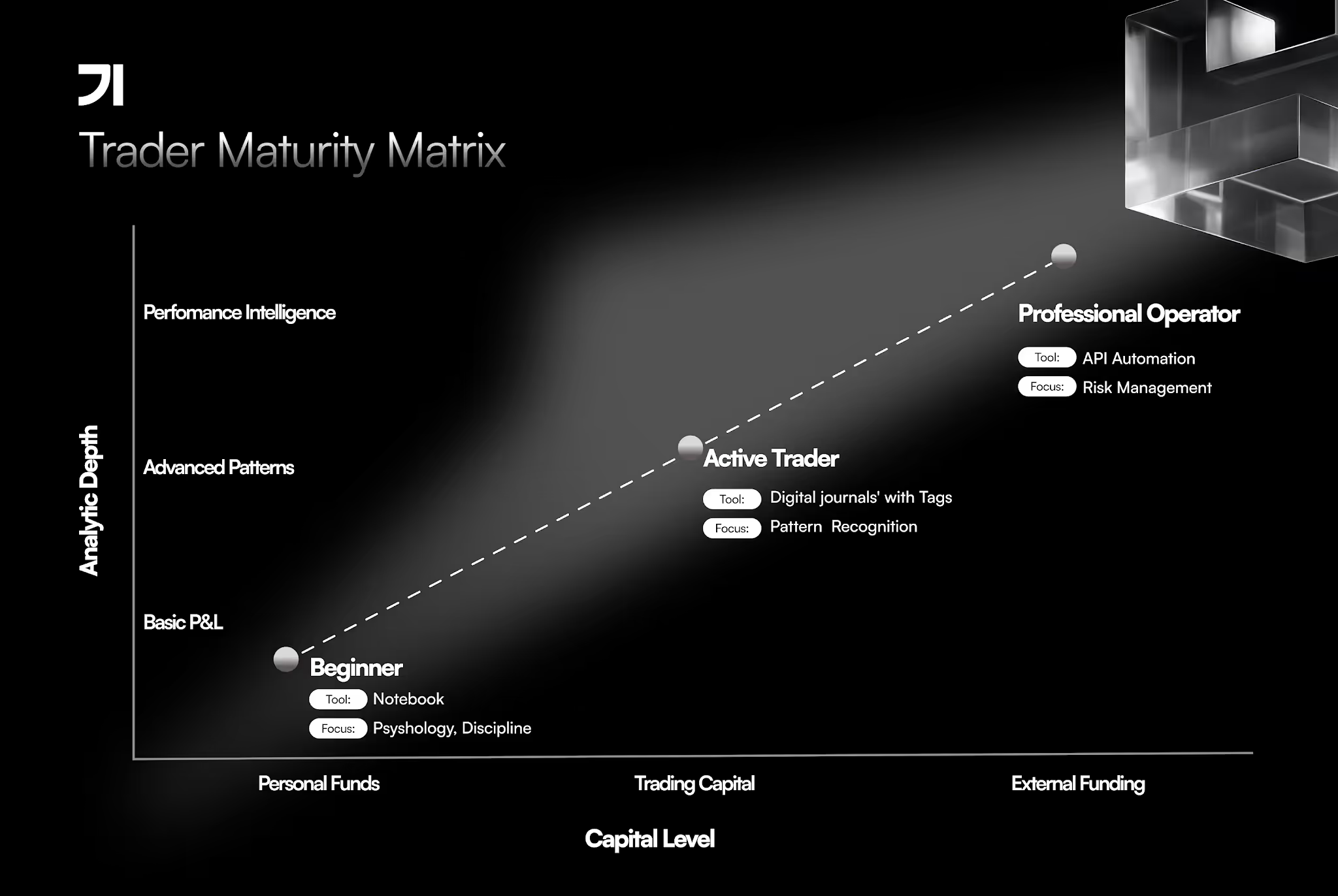
What a trading analytics platform does differently
The shift to an analytics platform is like replacing a paper map with a modern GPS system featuring real-time sensors, representing a significant trading innovation success in the modern era. You stop simply "recording" what happened and start "measuring" the performance of every move your capital makes.
Real-time performance tracking
Unlike static notes, the platform provides instant access to your equity curve, allowing you to see your portfolio's status without delays for manual data entry.
Deep understanding of expectancy and risk
You get automated calculations for Sharpe and Sortino ratios along with maximum drawdown, allowing you to evaluate not just profit, but its cost and consistency.
Comparative analysis of strategy behavior
The platform allows you to overlay the results of different algorithms, revealing correlations and understanding how various approaches interact within a single portfolio.
Spotting slippage and technical drift
Execution-level analytics help you notice hidden costs, such as slippage or execution delays, which silently erode your profit margins.
Evaluating resilience across market regimes
You can clearly see how your strategy adapts to volatility or trend shifts, providing confidence in its long-term viability.
Building a foundation for verified reporting
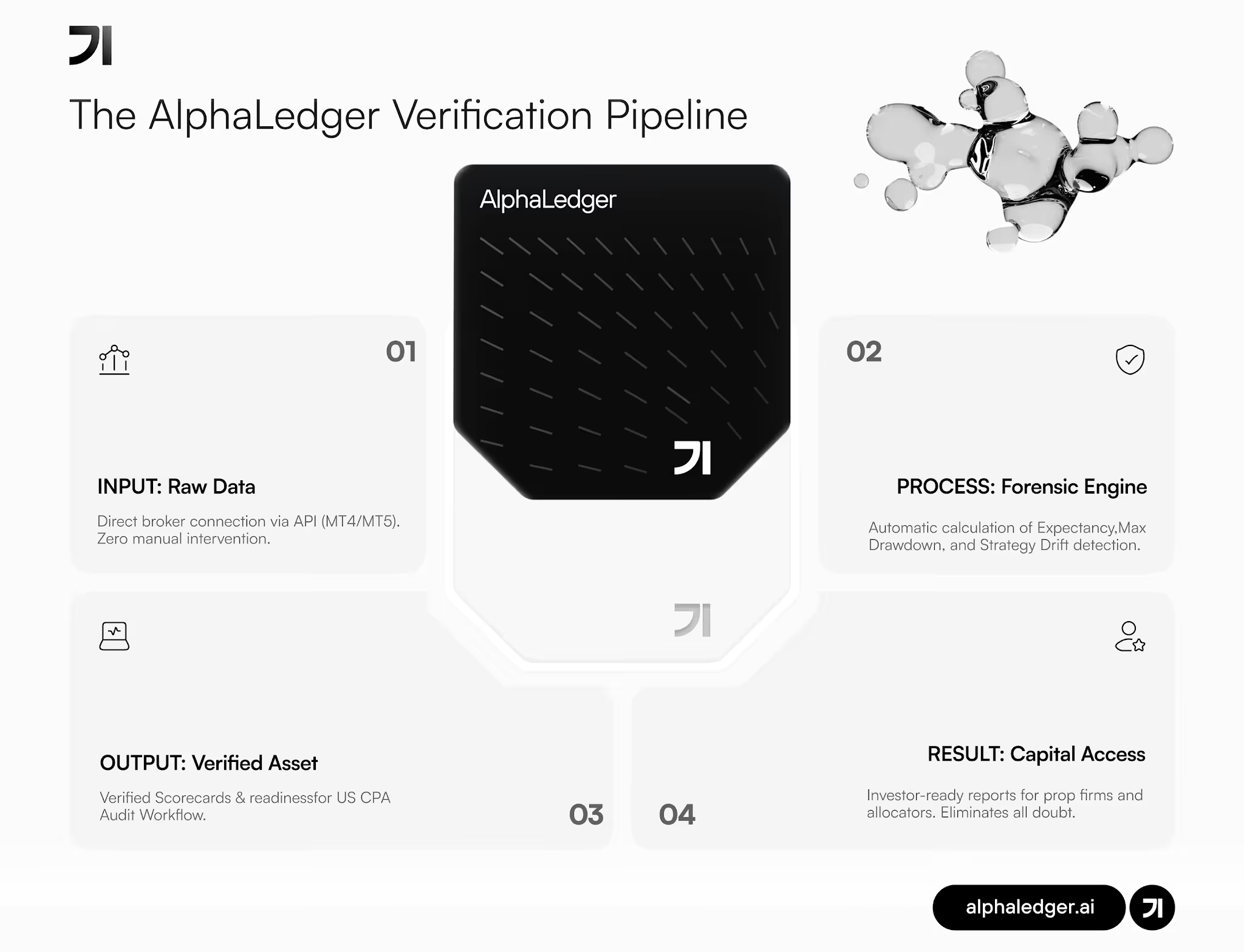
By using direct broker connectivity via API, you can boost security with cutting-edge technology, transforming your results into a tamper-evident asset ready for professional audit.
AlphaLedger transforms raw data into an intelligent asset, bridging the gap between your execution skills and investor trust through transparent, high-resolution analytics.
Trading journal vs trading analytics platform
While both tools handle trade data, they serve entirely different masters: one is designed for your private reflection, the other for public credibility and deep-tier strategy optimization.
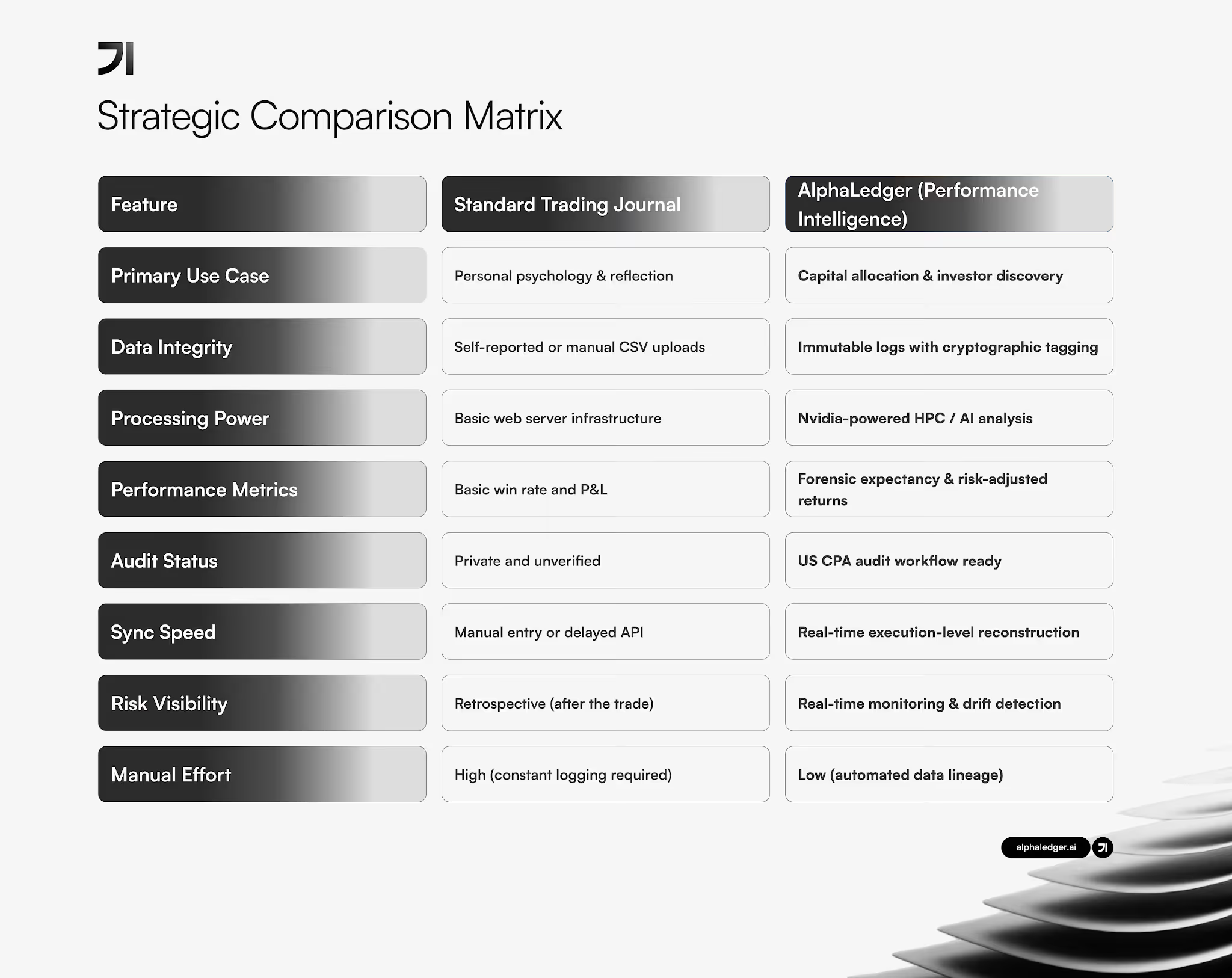
Moving to an analytics platform doesn’t mean you stop learning. It means you start proving your superiority with the same high-resolution data that top-tier hedge funds use.
When a Serious Trader Outgrows a Journal
Professional growth is always accompanied by a moment when familiar tools become too small. This doesn't mean the journal is "bad". It means your trading system has become more complex than your ability to describe it manually.
You will know it is time to transition to an analytics platform if you recognize yourself in any of these situations:
You Manage Multiple Accounts or Strategies
When trading several accounts or combining different strategies, manual logging turns into chaos. You need consolidated analytics to see the big picture without the risk of missing critical details.
Win Rate and P&L Are No Longer Enough
For a beginner, "profit" is the only metric. For a pro, it is just the tip of the iceberg. You need to know your Profit Factor, Sharpe Ratio, and Expectancy to understand the true quality of your results.
Your Strategy Is Degrading, and You Don't Know Why
Journals record results but don't always explain the causes. An analytics platform helps you spot "strategy drift" or a change in market regime before it leads to significant capital loss.
You Are Preparing for Professional Scrutiny
Whether passing a prop-firm challenge or preparing for an investor meeting, your personal notes carry no weight. You need a verified track record that cannot be manipulated or accidentally "fixed" in Excel.
Manual Data Entry Is Killing Your Productivity
If you spend more time filling out tables than analyzing the market, you are doing bureaucracy, not trading. Automation via API frees your time for what matters most - making trading decisions.
Why Verified Performance is More Important Than Personal Reflection
While a journal is an important tool for internal growth, professional trading is an external game of trust. There is a fundamental difference between a trader who understands their mistakes and a trader who can prove their success to a third party.
- The Difference Between Self-Awareness and Public Trust
A journal is designed to help you understand your own behavior, but a proven analytics workflow is designed to help others trust your bottom line.
- Moving from Private Notes to Verified Scorecards
AlphaLedger transforms private trading activity into public authority with Verified Scorecards that eliminate the “he said, she said” nature of performance reporting.
- The Need for Verified Results for Institutional Funding
When seeking external capital, your personal reflections don’t count; investors want a proven track record that demonstrates consistent execution without the possibility of data manipulation.
- H3: Creating a Secure Public Record
By using an automated analytics platform, you create a digital pipeline of your performance that can withstand forensic scrutiny during any due diligence process.
- H3: Professionalism through independent verification
Choosing a proven workflow over manual journaling signals to the market that you operate with the transparency and infrastructure of a professional fund manager.
In a world of high-stakes capital, proven performance is your public currency - what you need to scale your game.
STRATEGIC FAQ
FAQ 1: What is the difference between a trading journal and a trading analytics platform?
A: A trading journal is mainly for recording and reviewing trades, while a trading analytics platform is built to measure performance, risk, and consistency more deeply.
FAQ 2: Is AlphaLedger a trading journal or a trading analytics platform?
A: AlphaLedger is positioned as a trading analytics platform. It goes beyond basic journaling by focusing on real-time analytics, verified performance, and deeper strategy visibility for traders who need more than notes, tags, and screenshots.
FAQ 3: When should a trader move from a journal to AlphaLedger?
A: A trader usually outgrows a journal when they need richer performance metrics, clearer drawdown analysis, execution insight, or more credible reporting than a spreadsheet or manual review can provide.
FAQ 4: Can AlphaLedger help with verified trading performance?
A: Yes. AlphaLedger publicly positions itself around verified performance, real-time analytics, and audited leaderboard visibility, which makes it more useful than a basic journal for traders who want stronger reporting clarity.
FAQ 5: What should traders track beyond win rate in AlphaLedger or any analytics platform?
A: They should focus on metrics like expectancy, drawdown, profit factor, and risk-adjusted returns to understand whether a strategy has real edge and whether that edge is consistent over time.
How AlphaLedger fits in
Most traders don’t have a performance problem. They have a visibility problem. You can review trades all day long, but if all you’re doing is looking backwards, you’re missing the real opportunity.
That’s where AlphaLedger flips the script. It doesn’t just log what happened. It turns your trading activity into something far more valuable.
The platform acts as a professional bridge that turns trading history into a verified asset to build trust with investors.
Start building a track record on AlphaLedger that investors can evaluate with much greater confidence, and connect your account to move to verified performance reporting.

