


Let’s be honest: if you approach an investor with terminal screenshots, cherry-picked account statements, or a self-built Excel spreadsheet, you are asking for an advance of trust that you haven’t yet earned.
Strong performance is merely the entry ticket to the game, but it is not a guarantee of investment. The true currency in negotiations with allocators isn't the percentage in the "Profit" column. It is the ability to confirm every cent with independent data. Today, credible proof matters more than high numbers alone.
In this article, we will explore why standard reporting methods no longer work and how to transform your trading history into a professional track record that can stand up to the most rigorous investor due diligence.
Why most trading track records fail the trust test
The "trust gap" in trading is about verifiability. In a world of digital mirages, a self-reported record isn't a proof of success. It’s a request for unearned trust.
Professional scrutiny often collapses traditional formats for four reasons:
- Selective Screenshots: They are the ultimate "cherry-picking" tool, showing the winning destination while hiding the wreckage of losing trades left out of the frame.
- Plastic Spreadsheets: Excel is often called the world’s most popular "creative writing" tool. Without an "immutable DNA," manual logs are too easily edited or backdated to be credible.
- Incomplete Public Links: A link without context is just a puzzle piece. It hides critical details like leverage used or "burned" accounts that preceded the current one.
- Silent P&L Numbers: Raw profit ignores the process. It doesn't explain if you survived a drawdown through strategy or pure luck.
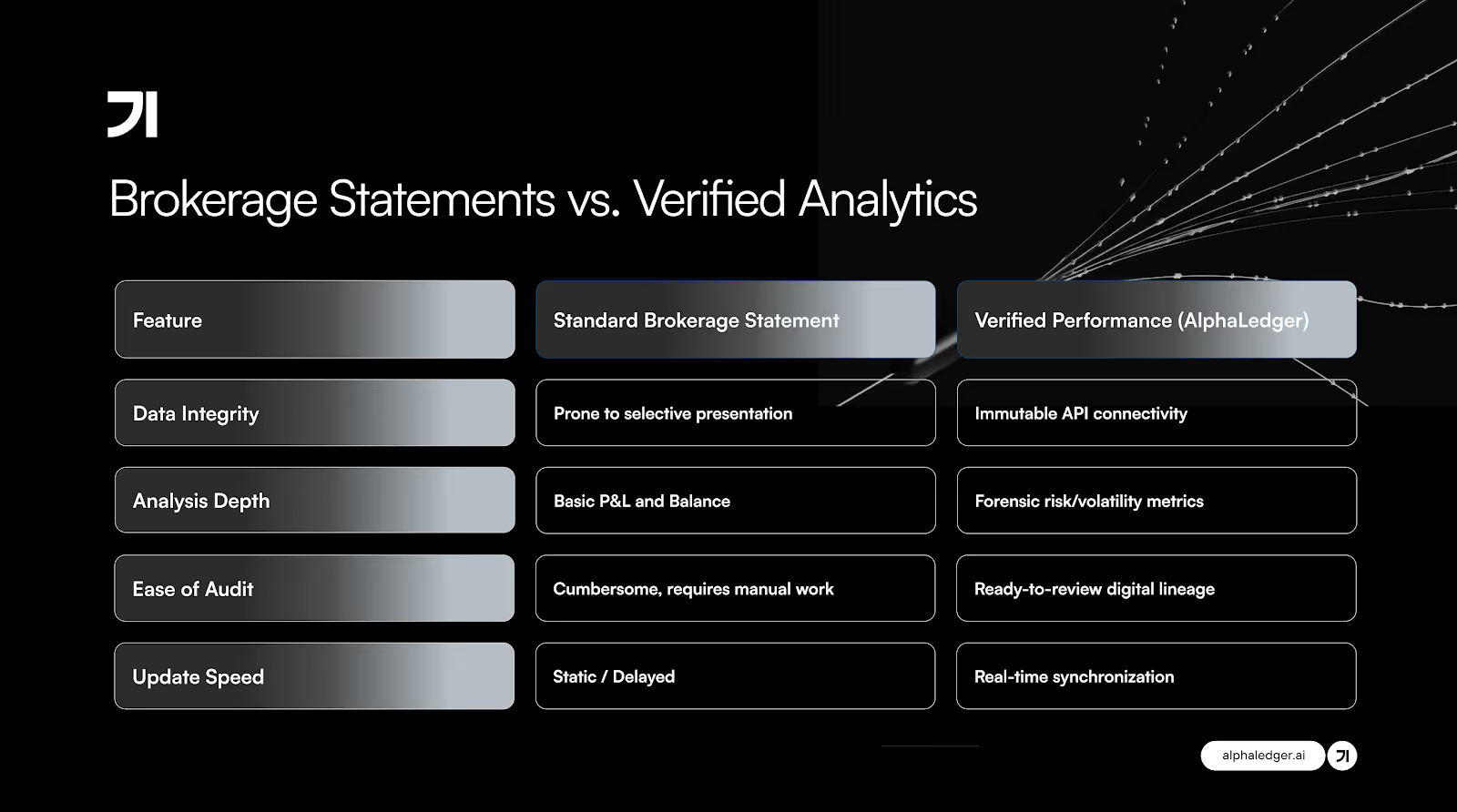
If a result cannot be independently traced and timestamped, it effectively does not exist.
To move from a "trader with a story" to a "manager with a track record," you must replace manual claims with automated transparency.
What investors actually want to verify
Approaching an investor without a verified track record is like trying to sell a high-performance car with the hood welded shut. The buyer might see a shiny exterior, but they have no way of knowing if the engine is built for the long haul or if it’s held together by duct tape and prayers.
The goal of every professional manager is to explore lucrative investment opportunities by proving their strategy remains robust over time.
To an investor, "due diligence" is a search for the truth behind the numbers. Before they allocate a single dollar, they are looking for answers to these fundamental questions:
- Are the results real? They need to see that your profits aren't just figures on a page, but verified historical performance that can be traced back to actual market executions.
- Were they achieved consistently? Investors look for "repeatability". They want to know if you have a robust process that works across different market regimes or if you just got lucky during a single bull run.
- What risk was taken to generate them? A 50% return is impressive, but not if you risked 90% of the capital to get there. Understanding your drawdowns and risk-adjusted metrics is non-negotiable.
- How were returns calculated? Clarity on return methodology and accounting policies matters. Investors need to ensure your math aligns with industry standards, such as GIPS or other recognized benchmarks.
- Is the reporting independent? Self-reported data is inherently biased. The most straightforward path to trust is a summary verified by a neutral third party or an independent accountant.
- Does the track record hold up over time? A snapshot of a month means little. Investors want to see explanatory disclosures and data that prove your strategy survives the test of time and volatility.
Ultimately, verification is about removing doubt. By providing a track record that answers these questions transparently, you stop asking for "blind faith" and start offering a professional partnership.
What makes a trading track record credible
To move beyond "blind faith," your performance data must transition from a simple story into a verifiable asset. Use this checklist to evaluate if your reporting is ready for professional scrutiny:
- Connected Source Data: Performance should flow directly from the brokerage via read-only API to eliminate manual editing.
- A Defined Time Period: Results must span enough months and market cycles to prove the strategy isn't just a "lucky streak."
- Clear Return Methodology: A transparent formula for calculating percentages ensures you and the investor speak the same language.
- Comprehensive Drawdown History: Credibility is built on showing the depth and recovery of losses, not just the peaks.
- Risk-Adjusted Metrics: Standard ratios like Sharpe or Sortino provide necessary context on the quality of your returns.
- Independent Reviewability: The data should be hosted on a neutral platform where it can be reviewed without your intervention.
Building this level of success is a fundamental shift in mindset.
It’s the difference between getting lucky and owning a proven financial asset.
If an investor were to ignore your verbal explanations and look only at the raw, independent data you provide today, would they see a professional transaction or just a series of incomprehensible events?
The difference between self-reported results and verified performance
Presenting unverified trading results is like trying to cross a border with a hand-drawn postcard instead of a passport. You might be sincere, but to an investor, your document lacks financial legitimacy.
To bridge the gap between amateur claims and professional standards, consider this direct comparison:
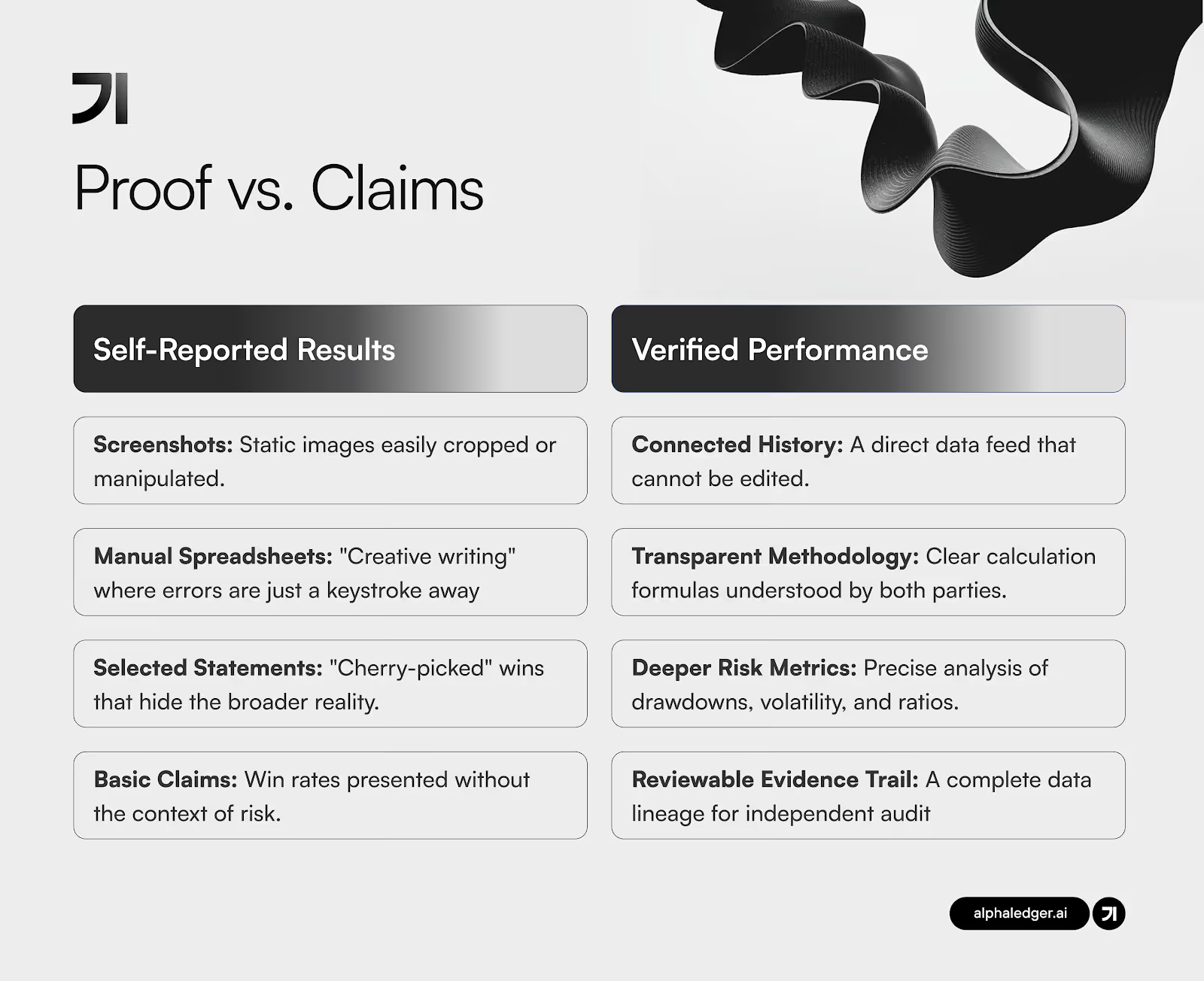
The difference between these columns is the difference between noise and signal. Self-reporting creates an illusion of success, while verified performance builds a foundation for partnership. If you want to be treated as an asset manager rather than a lucky player, your "passport" must be authentic.
The Metrics That Matter Before You Ask Anyone for Capital
Investors are rarely dazzled by a "headline return" figure. In professional finance, a massive profit without context is a red flag. Professionals look for repeatability, downside control, and clarity.
To speak the language of an allocator, your track record must focus on these essentials:
- Return Over Time: A steady equity curve that suggests a stable, repeatable edge.
- Maximum Drawdown: The ultimate stress test, showing your true risk tolerance and recovery capacity.
- Profit Factor and Expectancy: Mathematical proof that your wins consistently outweigh your losses.
- Sharpe or Sortino Ratio: The gold standard for separating high-quality skill from simple market noise.
- Consistency by Month or Regime: Evidence that your strategy is robust across different levels of market volatility.
By presenting these metrics through a verified performance workflow, you move beyond a "lucky streak." You show an investor that you have a forensic understanding of your execution and the discipline to manage external capital.
Why auditability and independent review matter
As capital grows, screenshots lose their value. Investors look beyond profit for a trail of data that survives an independent review. In high-stakes trading, trust become a verifiable fact. Managers who boost security with cutting-edge technology during the reporting phase show they value data integrity as much as their investors do.
Removing doubt, not just showing wins
Verification is about removing suspicion. By providing a track record that allows for independent review, you stop defending your honesty and start demonstrating your professional infrastructure.
The institutional standard for trust
Global standards, often referenced by firms like KPMG, highlight that independently verified historical performance is the clearest path to funding. An audited record proves you respect the investor’s need for capital protection.
The psychology of professional capital
The more money is at stake, the less investors listen to narratives. Independent review acts as a professional filter, proving that your edge is a result of consistent execution rather than selective reporting.
Auditability is a form of respect. It shows you value an investor’s peace of mind as much as the capital they provide.
Strategic FAQ
FAQ 1: How do I verify my trading performance?
A: Use an independent platform like AlphaLedger that connects directly to your broker via API to ensure data cannot be manually edited.
FAQ 2: Why aren't brokerage statements enough for investors?
A: Statements can be incomplete, prone to selective presentation, and are often difficult for investors to analyze for risk-adjusted metrics.
FAQ 3: What is a "verified trading results" record?
A: It is a performance history that has been independently tracked, ensuring that every win, loss, and drawdown is accurately recorded without bias.
FAQ 4: How long should a track record be?
A: While more is better, serious investors typically look for at least 6 to 12 months of consistent, verified data.
FAQ 5: How can traders present performance more professionally?
A: By using connected reporting, consistent metrics, and a defined methodology that can stand up to external review.
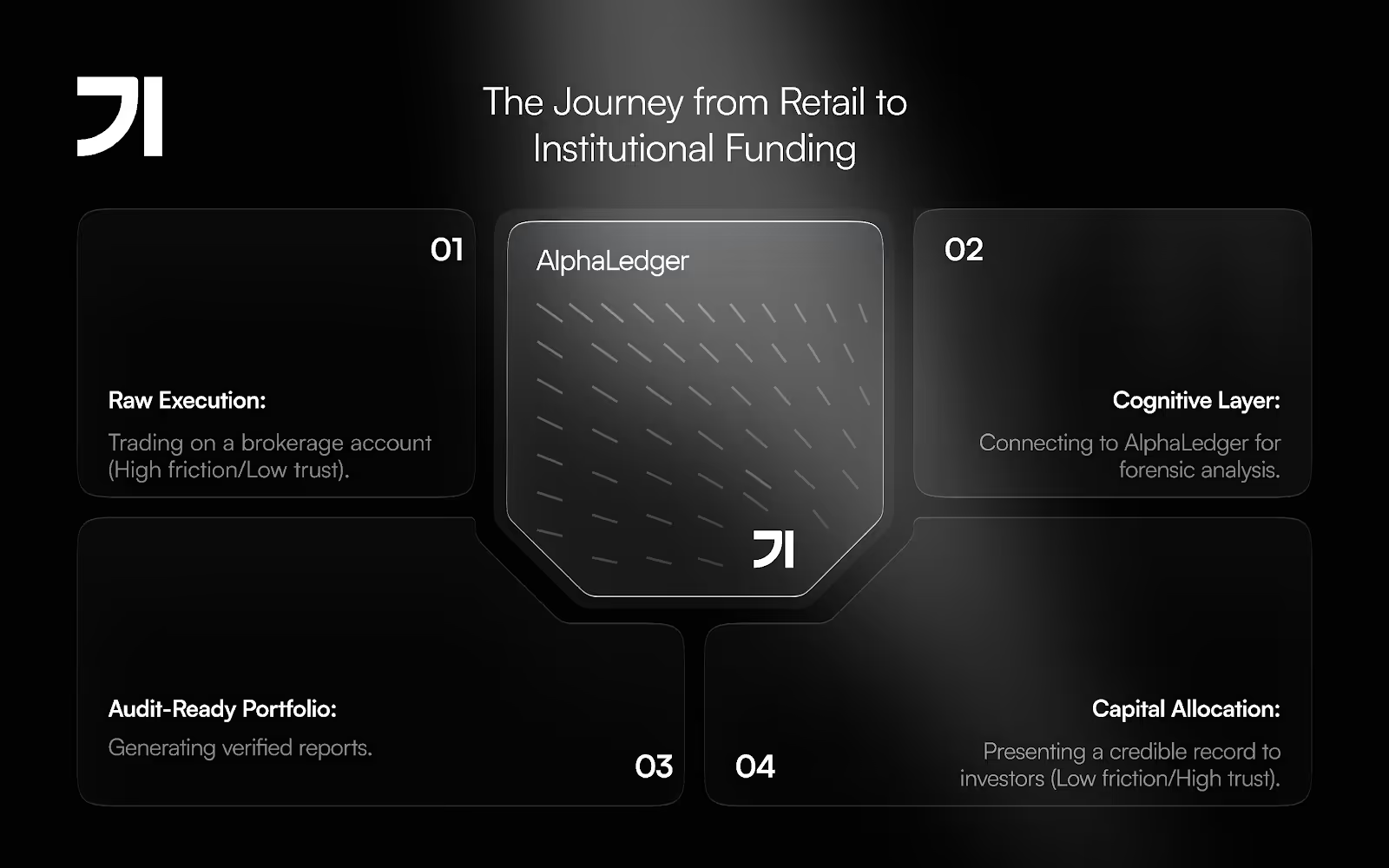
How AlphaLedger Helps Traders Build a More Credible Track Record
AlphaLedger acts as a neutral verification layer, transforming raw trade logs into forensic-quality tactical insights.
By replacing blind faith with transparency, the platform helps traders build an investment-grade record through a disciplined workflow:
- Direct Data Connectivity: Connect performance directly from the source to eliminate manual editing and ensure results are tamper-evident.
- Deep Forensic Analysis: Move beyond vanity metrics to analyze volatility-adjusted returns and strategy robustness across different market regimes.
- Audit-Oriented Reporting: Present verified history through a clear, investor-readable interface that provides the data lineage required for professional due diligence.
- Secure Monitoring: Utilize immutable trade logs and cryptographic tagging to ensure your activity is fully reconstructible and defensible. When you know your data is verified and your limits are monitored, you can trade anytime, anywhere with confidence.
AlphaLedger is designed to provide transparency and a direct connection between traders and investors. In a world where what remains hidden can harm your reputation, the platform ensures that your edge is visible and your results are undeniable.
Connect your account to move toward verified performance reporting and achieve long-term trading innovation success.

